Infinite Fictions: Essays on Literature and Theory by David Winters
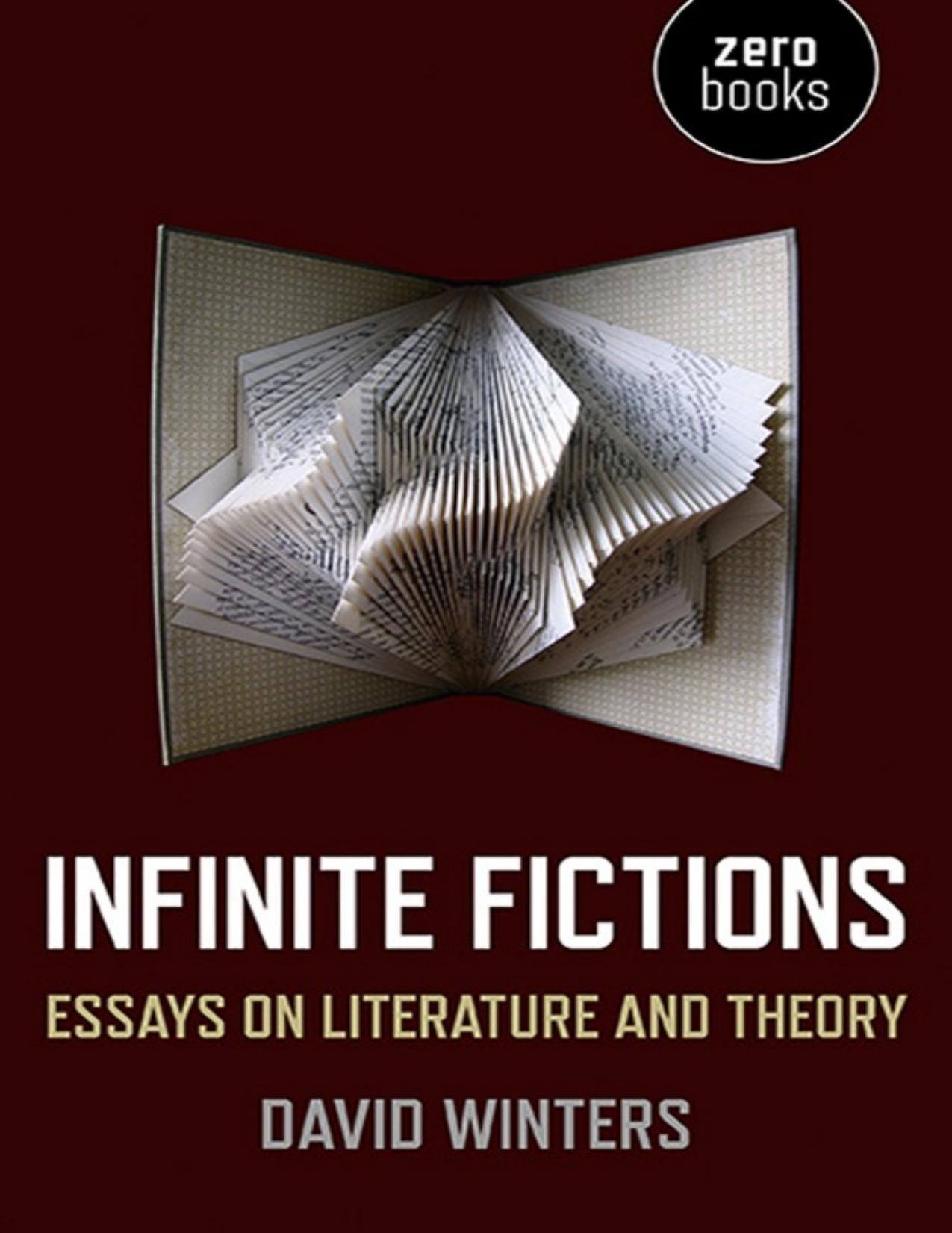
Author:David Winters
Language: eng
Format: mobi, pdf
ISBN: 9781782798026
Publisher: John Hunt Publishing
Published: 2015-01-30T02:00:00+00:00
Start from Zero and Count Backwards
Kjersti Skomsvold, The Faster I Walk, the Smaller I Am
Kjersti Skomsvold’s first novel was born while its author was bedridden, convalescing after an illness. She started putting scraps of prose on post-it notes, and over four years she wrote and rewrote, until she had finished The Faster I Walk, the Smaller I Am. This brief text is completely unified, and nothing of its early notational life survives in its structure. But its roots in its writer’s experience of enforced isolation are evident everywhere. The book seals up a single concern, making it an airtight container for one perfectly encircled emotion: loneliness.
Mathea Martinsen lives alone, an elderly widow, her links to the world loosened by something that seems like social anxiety or dementia. The book imagines her last monologue, echoing, perhaps, Beckett’s Happy Days. Her late husband, Neils (or as she calls him, “Epsilon”) remains absently present, his afterimage imprinted on almost every phrase of her narrative. At first we’re uncertain whether he’s physically with her or not; her consciousness flows between memory and present perception so seamlessly that each resembles the other. It isn’t simply that Epsilon’s ghost lives on in the grain of her voice. Her voice itself is a single surface: although its curvature conjures up illusory entities, deep down it knows nothing of individuals. On this level, Mathea’s inner life is liquid; her mind is like the sea.
In a sense, Skomsvold’s book is nothing but a voice – a voice whose horizons coincide with those of a mind. And in its intransitivity, this voice could be said to find its bedrock in what Deleuze called “the univocity of being.” Or as Mathea terms the world’s indivisible whole, “totality.” Her problem is that she feels estranged from this totality, yet yearns to return to it. “Perhaps I should stop seeing myself as an individual and start identifying myself with the totality,” she thinks, “but… I’m about as far away from it as you can get.” Skomsvold doesn’t need to explain her character’s sense of estrangement, because the limits of the book are those of Mathea’s mind. After all, no one ever really knows why they are the way they are.
On one hand, Mathea longs to lose herself in a benignly entropic universe, obeying her mind’s inward pull toward dissolution and death. But an opposite impulse calls her to cling to her life’s specificity, searching for any attributes that make her unique – bathetically put, at one point, as a matter of “what my name is, or what my favorite color is, or which cassette tape I’d take with me to a desert island if I could choose only one.” To be sure, Skomsvold makes much of Mathea’s personal quirks, and thus we could claim that her voice is caught, or pulled taut, between the totality and her own personality.
Importantly, there was a point in her past when these axes converged. As a young girl she was struck twice by lightning on the same spot.
Download
Infinite Fictions: Essays on Literature and Theory by David Winters.pdf
This site does not store any files on its server. We only index and link to content provided by other sites. Please contact the content providers to delete copyright contents if any and email us, we'll remove relevant links or contents immediately.
4 3 2 1: A Novel by Paul Auster(12382)
The handmaid's tale by Margaret Atwood(7761)
Giovanni's Room by James Baldwin(7334)
Big Magic: Creative Living Beyond Fear by Elizabeth Gilbert(5767)
Asking the Right Questions: A Guide to Critical Thinking by M. Neil Browne & Stuart M. Keeley(5766)
Ego Is the Enemy by Ryan Holiday(5424)
The Body: A Guide for Occupants by Bill Bryson(5086)
On Writing A Memoir of the Craft by Stephen King(4938)
Ken Follett - World without end by Ken Follett(4726)
Adulting by Kelly Williams Brown(4569)
Bluets by Maggie Nelson(4550)
Eat That Frog! by Brian Tracy(4528)
Guilty Pleasures by Laurell K Hamilton(4443)
The Poetry of Pablo Neruda by Pablo Neruda(4100)
Alive: The Story of the Andes Survivors by Piers Paul Read(4025)
White Noise - A Novel by Don DeLillo(4006)
Fingerprints of the Gods by Graham Hancock(3999)
The Book of Joy by Dalai Lama(3978)
The Bookshop by Penelope Fitzgerald(3848)
